

Cargo Delivery from China to Ukraine
ETS arranges cargo delivery from China to Ukraine by sea in containers, as groupage consignments, by air and through multimodal schemes. We handle the booking, supervise loading at the supplier, prepare the transport documents and deliver to the consignee’s warehouse. Customs clearance is done by a broker — we work with vetted partners. The format is chosen for the specific cargo: a scheme that pays off for a full container almost never pays off for half a pallet.
Describe your cargo and route — we will come back with a quote
A manager will contact you within one hour, confirm the details and send you a quote.
How the cargo travels: route and transit times
There is no direct sea connection between China and Ukraine, so the route is always made up of at least two legs. Cargo leaves the ports of Guangzhou, Shanghai, Shenzhen or Qingdao and travels by sea to Gdańsk or Gdynia — less often to Constanța.
At the transshipment port the container is discharged, and the cargo continues to the consignee by road. Groupage consignments are consolidated at our partner warehouse in China before departure.
Transit times
| Format | Transit, port to port | Note |
|---|---|---|
| FCL — full container | 45–55 days | Chinese port → Gdańsk / Gdynia |
| LTL — groupage | 45–60 days | Add time for container consolidation at the partner warehouse in China |
| Air | 1–5 days | Airport → airport |
Inland leg. On top of the transit above, delivery from Gdańsk to the consignee in Ukraine takes 4–7 days as groupage and 2–3 days by dedicated truck.
FCL — full container
A dedicated 20ft or 40ft container for your cargo, with no consolidation with other shipments. The lowest rate per cubic metre once the cargo fills the container. The standard format for regular imports.
LTL — groupage
You pay only for your own volume; the container is made up of several shipments. Minimum consignment is one euro pallet 120×80 from 100 kg. Transit is longer than FCL because of consolidation at our partner warehouse in China.
Oversized and project cargo
Equipment, machinery and structures that exceed the dimensions of a standard container. Requires dedicated securing schemes, flat rack or out of gauge, and route approval for the inland leg.
Air — urgent cargo
When the cargo is needed fast, or it is expensive and light: electronics, components, samples, spare parts for a halted line. The rate is based on actual or volumetric weight — whichever is greater.
What we ship on this route
Equipment and industrial cargo
China → Ukraine
- Industrial equipment and machine tools — often exceeds container dimensions
- Components and spare parts — by air when a production line is waiting on them
- Oversized and project cargo — flat rack or out of gauge
Consumer goods and special cargo
China → Ukraine
- Electronics and home appliances — need careful packing and securing
- Consumer goods, clothing and textiles
- Consignments from several suppliers — consolidated into one container
- Dangerous goods (ADR / IMDG) — batteries, chemicals, aerosols
Export Ukraine → China. The service is available and we quote it on request. The dominant flow on this route is import, so export shipments are priced case by case.
Cargo delivery from China: how it actually works
Cargo delivery from China to Ukraine is always a composite route of at least two legs: a sea or air leg to a port or airport in Europe, then inland delivery to the consignee’s warehouse. There is no direct connection between Ukraine and China for commercial cargo, so the real question is not which mode of transport to use, but through which transshipment point and in which format. That choice drives both the transit time and the final cost.
Why the route from China is always composite
Shipping lines out of Chinese ports serve European hubs. ETS ships mainly from Guangzhou, Shanghai, Shenzhen and Qingdao, and transships in Gdańsk or Gdynia — less often in Constanța. The container arrives there, is discharged, and the cargo then moves into Ukraine by road. That is a separate leg with its own cost and its own schedule: 4–7 days from Gdańsk as groupage, 2–3 days by dedicated truck.
The practical consequence: carrier quotes are only comparable door to door. A rate to the port of destination tells you nothing about what the cargo will cost standing at your warehouse in Kyiv or Lviv.
Choosing the right format for your cargo
The choice between a dedicated container and a groupage shipment comes down to volume and deadline, not price per kilogram.
- Full container (FCL) — when the cargo fills a 20ft or 40ft container, or comes close. Transit port to port is 45–55 days. The rate per cubic metre is the lowest, the cargo is not handled at consolidation warehouses, and the risk of damage is minimal.
- Groupage (LTL) — when the consignment does not fill a container. Minimum consignment is one euro pallet 120×80 from 100 kg. Transit port to port is 45–60 days: consolidation time is added to the sea leg.
- Air — 1–5 days airport to airport. Right for cargo that is expensive, light or urgent. It is rated on actual or volumetric weight, whichever is greater, so bulky lightweight goods turn out unexpectedly costly by air.
- Oversized and project cargo — equipment that will not fit a standard container. Carried on flat rack or as out of gauge, it needs a dedicated securing scheme and approval of the inland leg. Transit is quoted per shipment.
If the cargo consists of consignments from several suppliers, they are consolidated into a single shipment at our partner warehouse in China — cheaper than moving each one separately, and it produces one set of documents instead of several.
What makes up the cost of delivery from China
The final price is not a single rate but several components, and freight is not always the largest of them.
- Freight — the sea or air leg. Depends on the lane, the season and how booked the lines are, and moves through the year.
- Handling at the transshipment port — discharge, storage, release paperwork.
- Inland leg — delivery from Gdańsk to the consignee’s warehouse.
- Actual dimensions — weight and volume as packed, not as stated on the supplier’s invoice.
- Container idle time — demurrage and detention are charged per day if the container is not collected or returned on time.
- Insurance — arranged on request, calculated on the declared value of the cargo.
For groupage, the rate is based on weight or volume — whichever is greater. Dense heavy cargo pays by weight, bulky light cargo pays by cubic metre.
Seasonality and planning
Chinese logistics has two predictable peaks worth building into a purchasing plan. The first is Chinese New Year: factories stop for several weeks, and in the month before it everyone rushes to ship, so vessel space runs out and rates rise. The second, smaller one, falls in early October.
A practical rule: given 45–55 days for the sea leg alone, a shipment due to arrive in February or March should be booked well before the pre-holiday rush begins. Cargo dispatched into the shutdown itself will sit still — not because of the carrier, but because the factory is closed and the port is congested.
Documents and customs
On imports from China, customs checks that the actual cargo matches the supplier’s paperwork: goods description, HS code, weight and number of packages. Most delays happen not at the border but because the invoice and what actually arrived do not match. ETS is responsible for the transport and the transport documents; customs clearance is done by a broker.
What the client prepares
- Foreign trade contract with the supplier
- Commercial invoice
- Packing list
- Specification or technical description of the goods
- Certificates and permits, where the goods require them
What ETS takes care of
- Booking and arranging the shipment with the supplier
- Transport documents for each leg of the route
- Supervision of transshipment and inland dispatch
- Cargo insurance on request
- Handover of the document set to the broker
Customs clearance is handled by a broker. We work with vetted partners and can recommend one.
Route specifics
Actual weight and dimensions rarely match the invoice
Suppliers quote figures taken before packing, while the rate is calculated on the actual cargo — pallets, crating and stretch wrap included. A few centimetres in height can push a consignment into the next pricing step. Before booking we ask for photos of the packed cargo and a control measurement.
Groupage depends on filling the container
A container leaves when it is full, not when your consignment is ready. For small shipments that means waiting at the partner warehouse. If the date is critical, it is worth pricing both options at once — groupage and a dedicated container.
Seasonal peaks move every date
Production stops for several weeks before Chinese New Year, and in the month before that everyone tries to ship out, so vessel space runs out and rates climb. The same happens on a smaller scale in early October. Shipments falling into these windows are planned well in advance.
A common mistake
Judging offers by the container freight rate alone. Freight covers the sea leg only; on top of it come inland delivery from the transshipment port, storage, and — if the container is not collected or returned on time — demurrage and detention, charged per day. A client compares two quotes on freight, picks the cheaper one and ends up with a final invoice higher than the expensive one. Ask for a door-to-door quote, not a port quote.
ETS - європейські транспортні системи
Freight cost calculator
Ми з 2011 року перевозимо вантажі будь-якої складності між Україною та країнами Європи і Азії. Для зручності ми розробили цей калькулятор вартості вантажоперевезень.
Мінімальна вага доставки Вашого вантажу починається з 100 кг або 1 м3.
Ми не зможемо Вам допомогти з квартирними переїздами і доставкою особистих речей.
Заповніть форму і отримайте оперативно детальний розрахунок!
Case studies
China → Ukraine
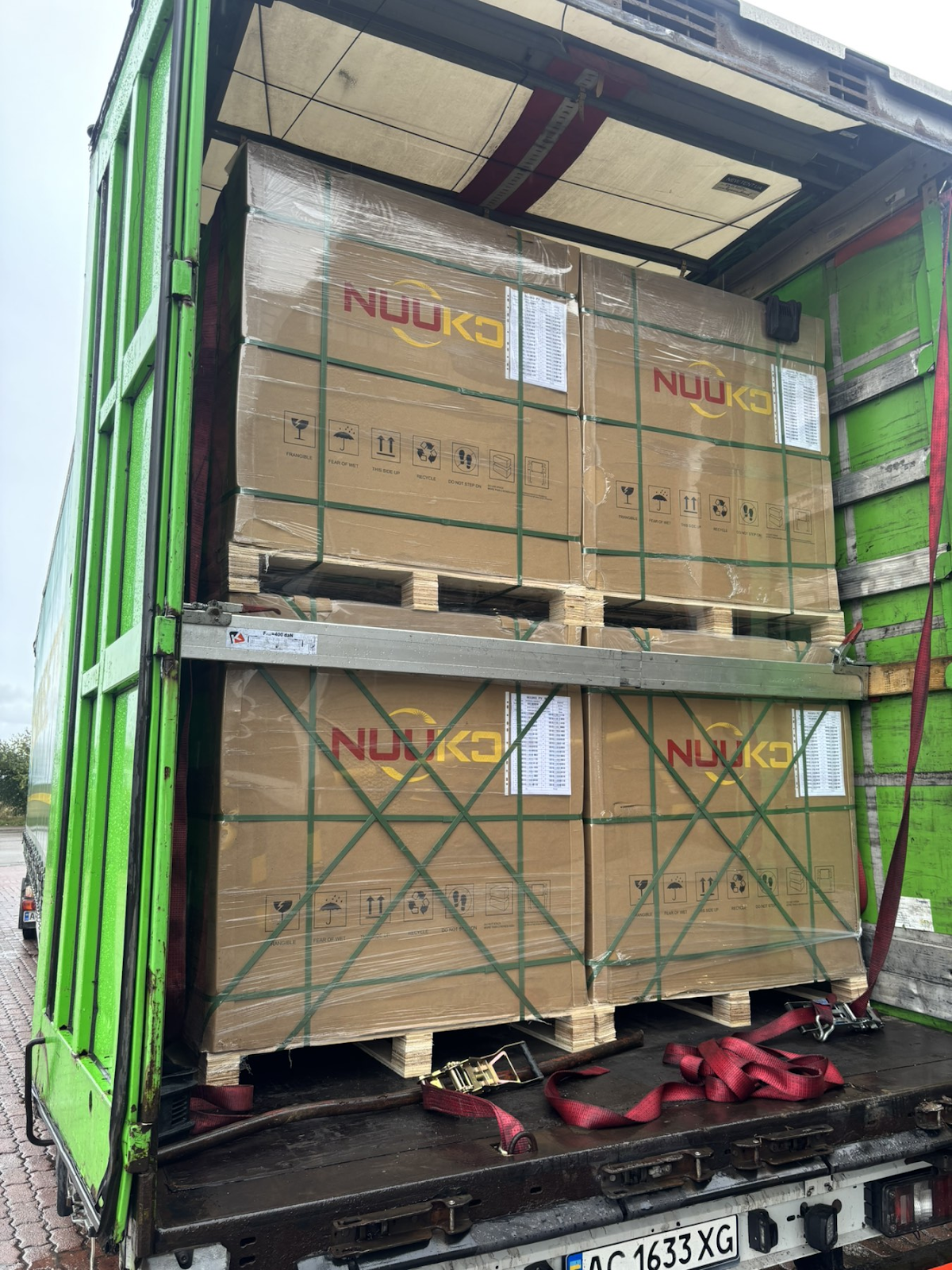
Solar panels: four containers from Shanghai to Cherkasy region
A consignment of solar panels filling four 40ft containers at 23,730 kg each. By sea from Shanghai to Gdańsk, then by four trucks via Kyiv, where customs clearance took place, to the village of Moshny in Cherkasy region. The difficulty was coordination: the Chinese supplier, the shipping agent, the Polish warehouse and the brokers all had to work without a gap. The cargo arrived on time with a complete set of accompanying documents.
Read the full case →
China → Ukraine
Textiles: a container from China to Khmelnytskyi
August 2025. A 40ft container of textiles travelled by sea to the port of Gdańsk, where the cargo was transferred to road transport and a T1 transit document was issued, then on to Khmelnytskyi. The route called for tight coordination at every stage — from the sea leg through to the final road delivery. The client received the cargo within the agreed deadline and with no additional costs.
Read the full case →
China → Ukraine
22 tonnes of yarn: multimodal China to Ukraine
A 40ft container carrying 22 tonnes of yarn. By sea from China to Gdańsk, transferred there into a euro truck, cleared through customs and delivered to the client. A multimodal route has to be costed carefully leg by leg: every handover between modes of transport is a separate risk to the schedule. An ETS specialist oversaw each stage and the shipment was completed on time, exactly as agreed.
Read the full case →Frequently asked questions (FAQ)
How much does cargo delivery from China cost and what drives the price?
The cost is made up of freight (the sea or air leg), handling at the transshipment port, inland delivery from Gdańsk to the consignee’s warehouse and, where required, insurance. For groupage the rate is based on weight or volume, whichever is greater. Freight rates move through the year with the season and how booked the lines are, so the price is fixed at the moment of booking. Quotes are only comparable door to door: a rate to the port of destination does not show what delivery to your warehouse really costs.
How long does cargo take from China to Ukraine?
By sea, port to port: full container (FCL) 45–55 days, groupage (LTL) 45–60 days. By air, 1–5 days airport to airport. On top of the sea leg comes inland delivery from Gdańsk to the consignee: 4–7 days as groupage, 2–3 days by dedicated truck. Groupage consignments also wait for the container to be filled at our partner warehouse in China. The exact transit time is confirmed by a manager when quoting a specific shipment.
Which ports does cargo from China go through?
Shipments leave mainly from Guangzhou, Shanghai, Shenzhen and Qingdao. Transshipment is usually in Gdańsk or Gdynia, less often in Constanța. The port of loading depends on where your supplier is based, and the transshipment port on the line schedules at the time of booking.
Which delivery formats are available from China?
A dedicated container (FCL) when the cargo fills a 20ft or 40ft container. Groupage (LTL) when the consignment is smaller than a container and you pay only for your own volume. Air for urgent, expensive and light cargo. Oversized and project transport for equipment that will not fit a standard container. The choice is driven by the volume of the consignment and how critical the arrival date is.
What is the minimum consignment for groupage?
One euro pallet 120×80 from 100 kg. Smaller consignments are not economical: handling and documentation costs outweigh the saving on freight. If your volume is below that, it usually makes sense to wait for the next order and ship together, or to consolidate consignments from several suppliers into one shipment.
Can goods from several suppliers be combined into one shipment?
Yes. Consignments from different suppliers are consolidated into a single shipment at our partner warehouse in China and then travel as one cargo. This is cheaper than moving each consignment separately and produces one set of transport documents instead of several. We need the list of suppliers, pickup addresses and a description of each consignment in advance to agree the loading schedule.
Who handles customs clearance for cargo from China?
Customs clearance is carried out by a customs broker — a separate licensed service that ETS does not provide. We are responsible for the transport, the transport documents and handing the document set to the broker. We work with vetted partners and can recommend a broker if you do not already have one.
Is the cargo insured in transit?
Yes, insurance is arranged on request and calculated on the declared value of the cargo. We recommend it for expensive, fragile and oversized cargo — on a composite route with transshipment the risk of mechanical damage is higher than on a direct one. Terms and cover are agreed before the shipment departs.
Do you carry dangerous goods from China?
Yes, we handle dangerous goods under IMDG on the sea leg and ADR on the inland leg — batteries, chemicals, aerosols, paints and similar categories. Such shipments require a safety data sheet (MSDS) from the supplier and correct classification by hazard class and UN number. The classification is worth agreeing before booking: it determines both the permissible route and the packing requirements.
Why do actual cargo dimensions matter more than the invoice?
The rate is calculated on actual weight and volume after packing — including pallets, crating and protective film — while suppliers usually quote figures from before packing. A few centimetres in height can move a consignment into the next pricing step, and a mismatch between documents and reality causes delays at clearance. That is why we ask for photos of the packed cargo and a control measurement before booking.
Let us price your route
Send us the cargo type, weight, dimensions and the pickup and delivery addresses — we will come back with a quote and a route recommendation.
Request a quote